

Is your security system working as a team or as a collection of strangers?
I’ve walked into facilities where cameras run on one platform, door access lives in another, and the gate system is managed through a third app that only one person remembers the password to. Everything technically works. Until something happens.
Then it’s chaos.
I remember standing in a control room with a facilities manager after an after-hours incident. You could hear the sharp tap-tap of keys as he flipped between software windows, trying to stitch together a timeline swipe, camera footage, and gate entry. Nothing lined up cleanly. Ten minutes felt like an hour. The frustration in that room wasn’t about broken equipment. It was about disconnected systems.
Here’s the truth: buying more hardware won’t fix that. Integrated security systems will.
The Cost of Fragmentation – More Than Just Inconvenience
Fragmented security isn’t just inefficient. It’s a liability.
In my experience, the biggest risks aren’t obvious failures. They’re small disconnects that compound over time.
Delayed Incident Response
When an access event occurs, staff often have to manually search camera footage in separate software. That delay can erase valuable minutes during a real emergency.
Missed Evidence
If your access control system doesn’t communicate with your video surveillance, badge swipes won’t automatically trigger recording bookmarks. That means hours of footage to sift through, not seconds.
According to ASIS International, integrated security strategies significantly improve incident response efficiency and situational awareness. That’s not theory, it’s operational math.
Administrative Burden
Multiple platforms mean multiple logins, credential databases, and update schedules. The more fragmented the system, the more opportunities for human error.
Security Gaps
A gate operating independently from surveillance creates blind spots. A door that unlocks without event-triggered recording leaves questions unanswered.
The Cybersecurity and Infrastructure Security Agency frequently highlights the risks posed by siloed physical and digital infrastructure. Disconnected systems don’t just slow response; they weaken oversight. Fragmentation feels manageable. Until it isn’t.
What True Integration Actually Looks Like
Let’s clear up a common misconception. Integration does not mean complexity. It means coordination.
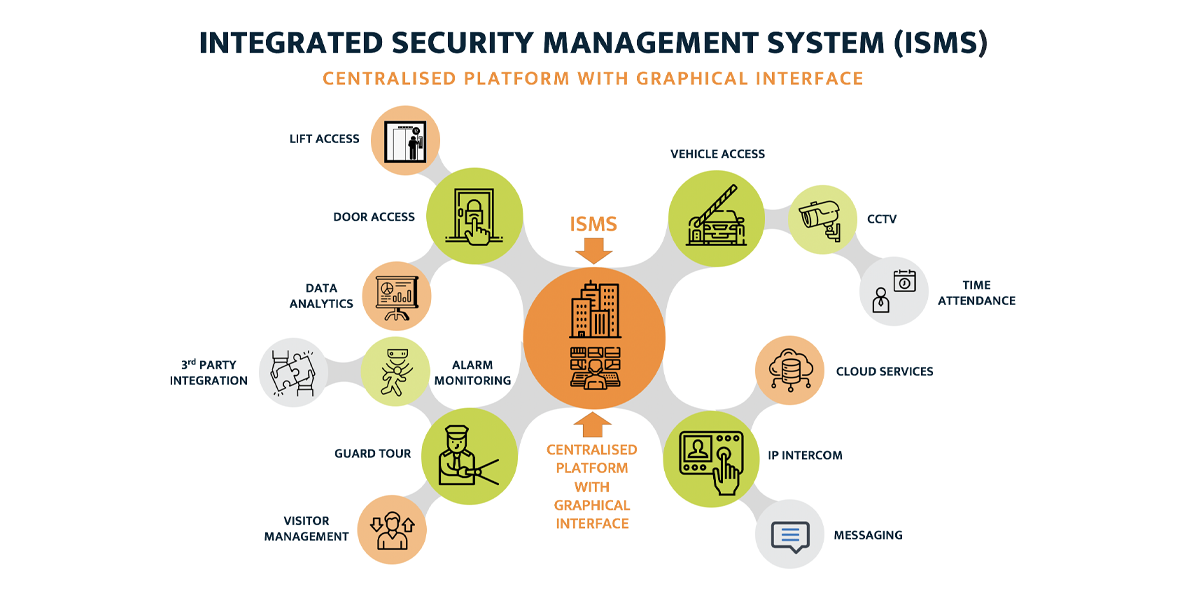
A properly designed security system integration framework allows systems to communicate intelligently:
- An access control badge swipe triggers synchronized video surveillance recording.
- A Gate Video Intercom verification links directly to gate operators for controlled entry.
- Credentials are unified across doors, gates, and interior checkpoints.
- A centralized dashboard, often through Cloud Base Access Control platforms like PDK, provides oversight without juggling screens.
We’ve found that when systems share data, response times drop dramatically, not because the equipment has improved, but because the context has improved. Think of it this way: standalone systems are instruments tuning independently of one another. Integration is the conductor ensuring they move together. Without coordination, you don’t have music. You have noise.
A Hard Opinion: More Cameras Won’t Make You Safer
Here’s my bold take.
Adding more cameras without integration can create a false sense of security.
I’ve seen facilities add dozens of devices, assuming coverage equals control. But if those cameras don’t align with access events or perimeter triggers, they simply generate more footage, not more protection.
The National Institute of Standards and Technology emphasizes system interoperability in critical infrastructure guidance for a reason. Equipment density isn’t the goal. Coordinated function is.
I’ll admit something. Early in my career, I focused heavily on expanding hardware coverage. More cameras felt proactive. Over time, I realized clarity beats quantity. A well-integrated system with strategic placement often outperforms an oversized, disconnected setup.
The Fortified Integrations Approach – Building Cohesive Environments
At Fortified Integrations, every product we install is selected for durability, security, and seamless compatibility. Integration isn’t an afterthought; it’s the starting point.
Here’s how that plays out in real environments:
- AIPHONE IP Video Intercom systems are directly integrated with access control, enabling secure verification before unlocking.
- DoorBird IP Video Gate Intercom connected with LiftMaster gate operators, coordinating vehicle entry with surveillance capture.
- Avycon Network Video Recorders are configured to automatically flag access events, so footage is indexed and searchable.
- Structured network cabling is designed to support stable, secure communication between systems because integration fails without infrastructure.
In commercial settings, unified platforms transform commercial security systems from reactive tools into operational assets. For office building security systems, integration streamlines visitor management and after-hours control. In retail businesses, coordinated access and surveillance enhance loss-prevention efforts. Even in residential security systems, integrated automation simplifies daily routines while preserving perimeter protection.
But I’ll be transparent. Integration requires planning. It may not make sense to rip and replace everything at once. In some facilities, phased upgrades are smarter. The key is designing toward a unified end state rather than stacking more isolated components.
Real-World Impact Across Facilities
When systems work together:
- Facilities managers gain cleaner reporting.
- Administrators cut the administrative workload.
- IT teams reduce credential sprawl.
- Security teams review incidents faster with fewer blind spots.
And something subtle happens: decision-makers stop constantly thinking about the system. That quiet confidence matters.
I’ve seen the relief on a client’s face when they realized they could pull a synchronized event report, access log and camera clip aligned in seconds. No frantic clicking. No guesswork. Just clarity.
That’s the difference.
Final Thoughts
Security isn’t about how much equipment you own. It’s about how intelligently it functions.
Fragmented systems demand constant babysitting. Integrated systems operate with purpose.
Stop managing security in silos. Let Fortified Integrations design a cohesive system where every component communicates. With over 30 years of experience, we don’t just install equipment; we build coordinated security environments.
Schedule a consultation, and let’s discuss how your facility can move from disconnected devices to true integration.